Why this capability matters
Creating a useful digital twin usually starts with incomplete material: system requirements, protocol notes, interface assumptions, vendor documentation, and engineering comments spread across multiple sources. The slow part is not only writing the model. The slow part is turning that fragmented input into a structured starting point that engineers can actually review, run, and improve.
SPX uses AI-assisted twin generation to shorten that first phase. Instead of hand-building the first model from scratch, teams can generate a reviewable twin draft that already reflects expected structure, interfaces, behaviors, and protocol surfaces.
Requirements arrive as engineering text, not as runnable twins
Manual first-pass modeling slows every integration project
Protocol expectations need to become explicit early
Generate a draft twin first, then refine it as an engineering artifact
What SPX generates
The goal is not to auto-write marketing copy around a model. The goal is to produce a twin draft that already has the right engineering shape, so teams can move faster into review, runtime testing, and protocol validation.
Twin entities and interfaces
Protocol-facing surfaces
Actions, state, and conditions
Reviewable, code-defined twin models
Core capabilities
This page should read as a concrete product capability, not as a generic AI claim. The important part is how SPX helps engineers move from documentation to a twin that can be run and improved inside the same platform.
Generate twins from engineering inputs
Turn fragmented inputs into one structured modeling baseline
Move directly from generated model to executable twin
Keep the twin editable for engineers and automation pipelines
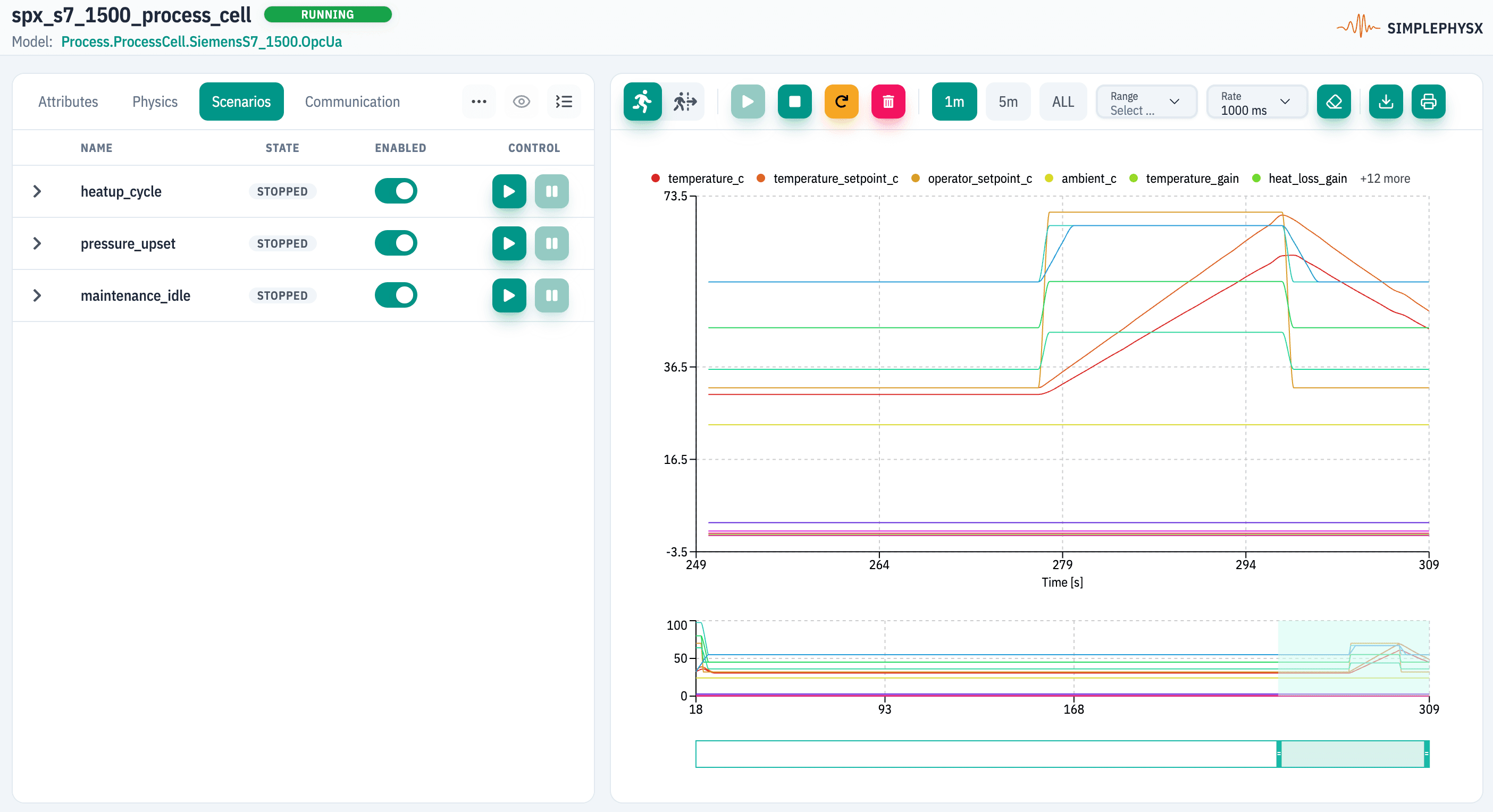
A generated twin should not stop at model text. In SPX, the same twin can move into runtime execution, observation, and test workflows.
From draft twin to runtime twin
The useful pattern is simple: generate, review, connect, refine. That makes this capability usable both for early design work and for later validation flows.
Start from source material
Review the generated model
Attach protocol behavior
Run and improve in context
Protocol-ready targets
AI-assisted generation is most useful when it helps teams get to concrete integration targets faster. In SPX, generated twins can become the starting point for runtime validation against the protocols you actually need to simulate and test.
OPC UA Simulator
Modbus Simulator
BACnet Simulator
KNX Simulator
MQTT Simulator
Developer path
Generated twins are most valuable when engineers can inspect and reuse them. That is why this capability should connect directly to model language, examples, and developer workflows rather than ending at a static page.